
NEWS
多文化コミュニケーション学科
サイクリング・プロフェッサー:Two Wheels Rolling 第3回 静けさを巡る――大村湾の哲学
- 2026.08.5
- 多文化コミュニケーション学科
Circling Calm: The Quiet Philosophy of 大村湾 (Ōmura Bay)
There are rides defined by distance, and others defined by pace.
Ōmura Bay is not a place that asks you to go faster. It asks you to notice.
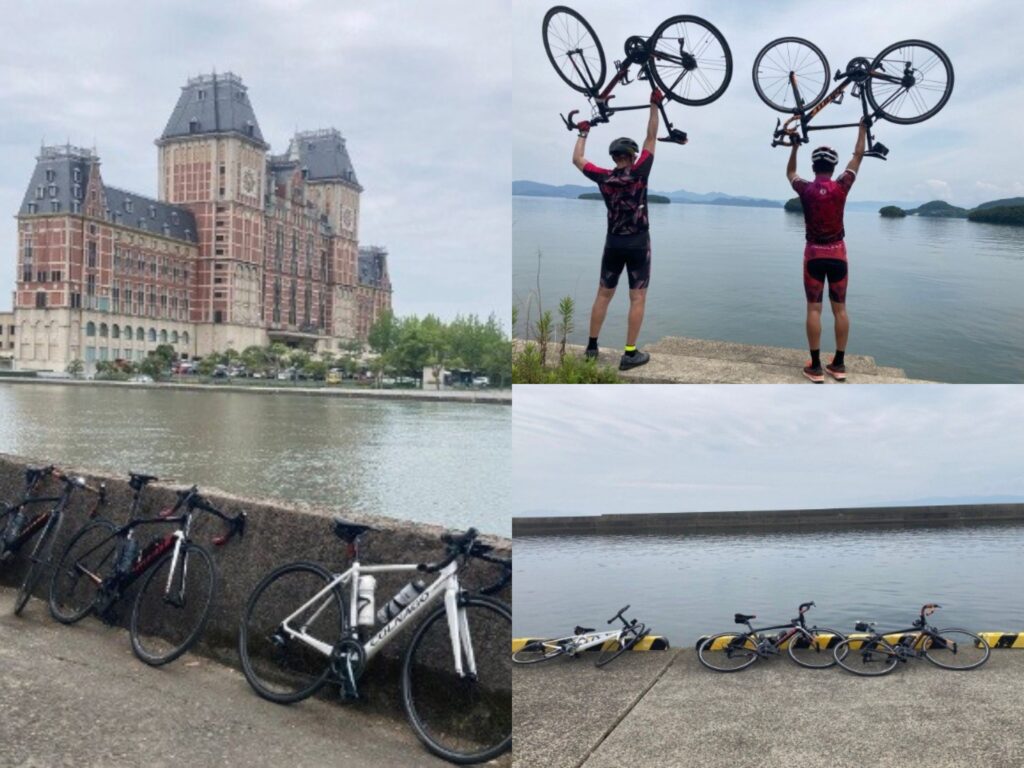
Unlike the open coastline, where wind and waves insist on movement, the waters of Ōmura Bay remain enclosed, measured, and calm. The road that traces its edge seems to follow this same logic. It curves gently, without urgency. There are no dramatic ascents, no sudden turns demanding attention—only a steady invitation to continue.
On such a ride, the mind begins to settle into rhythm with the body. Pedal, breathe, look. Pedal, breathe, look. The repetition is not monotonous; it is clarifying.
In teaching, there is often an emphasis on progress—covering material, reaching goals, moving forward. Yet learning, like cycling around Ōmura Bay, does not always benefit from acceleration. There is value in sustained attention, in returning to the same idea from slightly different angles, in allowing understanding to deepen at its own pace.
The stillness of the bay reflects this principle. The water does not demand interpretation. It simply holds what is present: the changing light, the passing clouds, the occasional ripple from a boat. To ride alongside it is to become aware of how much can be perceived when one is not in a hurry.
At times, I find myself coasting without realizing it. The legs pause, but the bicycle continues forward, carried by momentum. These moments are brief, but they linger in memory. They suggest that not all movement requires effort—that sometimes, what has already been set in motion is enough.
For students, this may be one of the more difficult lessons to accept. Effort is essential, but so is trust in the process. There are periods when progress feels invisible, when improvement cannot be easily measured. And yet, like the cyclist moving quietly along the edge of the bay, something is still unfolding.
The road eventually bends back toward busier routes, where traffic returns and decisions must be made more quickly. But for a time, Ōmura Bay offers an alternative: a space where movement and stillness are not opposites, but companions.
On two wheels, it becomes possible to experience both at once.
Lesson from the Road
Not all progress is visible.
Sometimes, understanding deepens most when we allow ourselves to move slowly enough to notice it.
サイクリング・プロフェッサー:Two Wheels Rolling 第3回 静けさを巡る――大村湾の哲学
距離によって記憶される走りもあれば、速さではなく「静けさ」によって印象づけられる走りもある。
大村湾は、速さを求める場所ではない。むしろ、「気づくこと」を求める場所である。
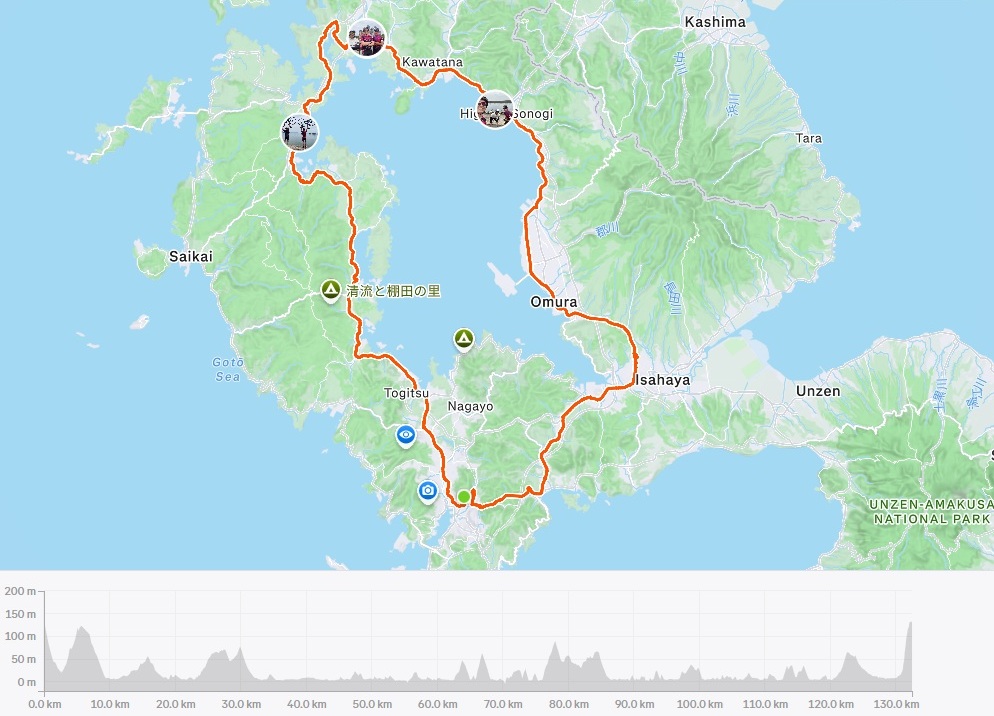
外海のように風や波が強く動きを促すことはなく、湾の水面は穏やかに保たれている。その輪郭に沿って延びる道もまた、同じように静かだ。急な上りもなければ、注意を引く劇的な変化もない。ただ、ゆるやかに続いていく。
こうした道を走っていると、身体のリズムとともに、思考もまた整っていく。ペダルを踏む、呼吸をする、目を向ける。その繰り返しは単調ではなく、むしろ意識を澄ませていく働きを持つ。
教育の現場では、しばしば「前進」が重視される。内容を進めること、目標に到達すること。しかし、大村湾を走ると、学びは必ずしも速さによって深まるものではないと感じる。同じ対象に繰り返し向き合い、少しずつ異なる角度から捉えることで、理解は静かに積み重なっていく。
湾の水面は、そのことを象徴しているかのようだ。特別な意味を主張することなく、ただ光や雲の移ろいを映し出す。そこには、「見ようとする姿勢」があって初めて立ち現れる豊かさがある。
気がつくと、足を止めて惰性で進んでいる瞬間がある。ペダルは止まっているが、自転車はなお前へと進む。その短い時間は、不思議と印象に残る。すべての前進が努力によってのみ支えられているわけではないことを、静かに示しているように感じられる。
学生にとって、この感覚は受け入れにくいかもしれない。努力は不可欠だが、同時にプロセスを信じることもまた重要である。変化が目に見えない時期であっても、何かは確かに進んでいる。
やがて道は再び交通量の多い場所へと戻り、判断やスピードが求められる。しかしその前に、大村湾はもう一つの在り方を提示してくれる。動きと静けさが対立するものではなく、共存しうるものであるという在り方を。
二つの車輪は、その両方を同時に体験させてくれる。
ロードからの一言
進歩は、必ずしも目に見える形で現れるとは限らない。
ゆっくりと進むことで、はじめて見えてくる理解もある。