
NEWS
多文化コミュニケーション学科
サイクリング・プロフェッサー:Two Wheels Rolling 第4回 潮の満ち引きのあいだで――鹿島と有明海
- 2026.09.5
- 多文化コミュニケーション学科
Across Tides and Time: 鹿島 and the Ariake Sea
Some landscapes do not stay still long enough to be easily understood.
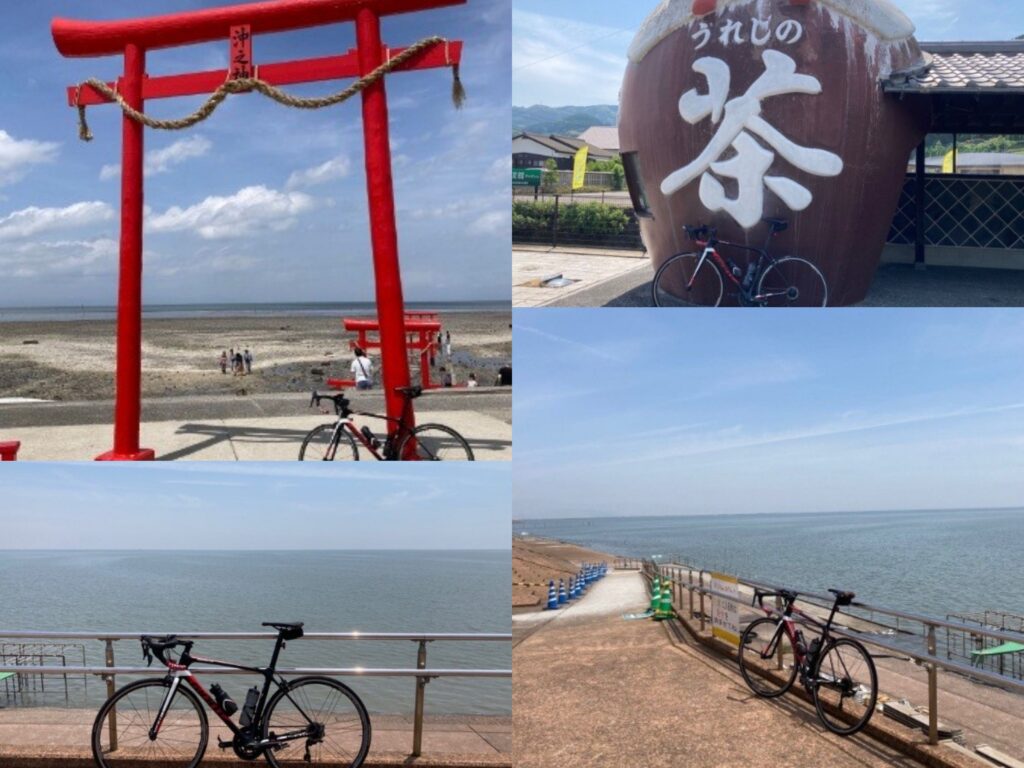
The coastline along the Ariake Sea, near 鹿島 (Kashima), is defined not by permanence, but by change. The tide moves in and out with remarkable range, revealing vast stretches of mudflat before quietly reclaiming them. What appears, disappears. What seems solid proves temporary.
Cycling along this shifting edge, the road becomes a kind of boundary—not fixed, but negotiated. On one side, land shaped by human intention: fields, small ports, quiet roads. On the other, a tidal world that resists containment, expanding and receding according to rhythms far older than any map.
Unlike the steady calm of Ōmura Bay, the Ariake coastline asks a different kind of attention. Timing matters here. The same view, encountered a few hours apart, can feel like an entirely different place. Where water once reflected the sky, there may now be textured earth, marked by the subtle traces of life.
On a bicycle, these changes are not observed from a distance—they are encountered gradually. The smell of the sea shifts. The air feels heavier or lighter. The horizon itself seems to move.
This landscape invites a different way of thinking about understanding. In education, we often look for stability: clear answers, consistent frameworks, reliable outcomes. Yet places like the Ariake Sea suggest that meaning is not always fixed. It can be contingent, shaped by context, timing, and perspective.
As I ride, I am reminded that learning, like the tide, involves cycles. There are moments when ideas are fully visible, when connections seem clear and expansive. And there are times when understanding recedes, leaving behind only fragments—patterns that hint at something larger, but do not yet fully reveal it.
Neither state is permanent. Both are necessary.
There is also a humility in this kind of landscape. Human activity continues—boats are moored, fields are tended—but always in quiet acknowledgment of forces that cannot be controlled. The cyclist, too, becomes part of this balance, moving through rather than mastering the environment.
The road stretches forward, sometimes elevated, sometimes close to the shifting shoreline. There is no single defining view, no fixed image to carry away. Instead, there is a sequence of impressions, each shaped by when and how it was encountered.
By the time I leave the coast behind, it is clear that this ride resists simple summary. It does not offer a single perspective, but many—each incomplete on its own.
On two wheels, that incompleteness becomes something to accept, rather than resolve.
Lesson from the Road
Understanding is not always fixed.
Like the tide, it shifts with time, context, and perspective.
サイクリング・プロフェッサー:Two Wheels Rolling 第4回 潮の満ち引きのあいだで――鹿島と有明海
すぐには理解できない風景というものがある。
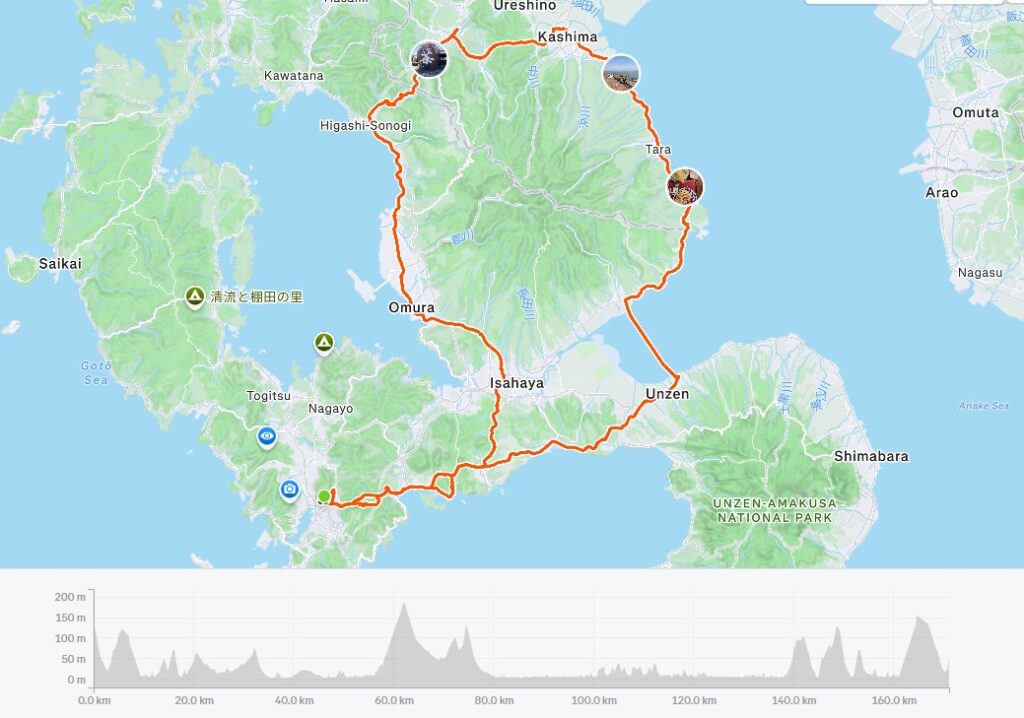
鹿島周辺の有明海沿岸は、「変化」によって特徴づけられている。潮の干満差は大きく、干潮時には広大な干潟が現れ、やがて静かに海に覆われていく。現れては消え、確かなもののように見えたものが、やがて姿を変える。
この移ろう境界に沿って自転車を走らせると、道そのものが一つの「境界」として感じられてくる。ただしそれは固定されたものではなく、常に揺らいでいる境界である。一方には、人の営みによって整えられた陸地――田畑や港、静かな集落。もう一方には、はるか以前から続くリズムに従って広がり、引いていく海の世界。
大村湾のような静的な落ち着きとは異なり、有明海は「時間」によって姿を変える。同じ場所であっても、数時間後にはまったく異なる風景が現れる。水面が空を映していた場所が、やがて細かな生命の痕跡に満ちた大地へと変わる。
自転車で走ることで、こうした変化は連続的に体験される。潮の香りの変化、空気の重さ、視界の広がり方――それらが少しずつ移り変わっていく。
この風景は、「理解」そのものについての考え方を問いかけてくる。教育においては、安定した答えや一貫した枠組みが求められることが多い。しかし有明海のような場所は、意味が固定されるものではなく、状況や時間、視点によって形を変えるものであることを示している。
走りながら、学びもまた「満ち引き」を持つものだと感じる。ある時には理解が広がり、すべてが明確に見える瞬間がある。一方で、理解が後退したように感じられ、断片だけが残る時期もある。しかしそのどちらもが、学びの過程には不可欠である。
この土地には、ある種の謙虚さも感じられる。人々の営みは続いているが、それは決して自然を支配するものではなく、大きな力の中で共存する形で成り立っている。自転車で走る者もまた、その一部として風景の中に溶け込んでいく。
道は時に高く、時に海に近づきながら続いていく。しかし、ここには一つの決定的な風景は存在しない。代わりにあるのは、時間とともに変化する印象の積み重ねである。
有明海を離れる頃には、この場所が単純な言葉で語れないものであることに気づく。一つの見方では捉えきれない、多層的な風景。
二つの車輪は、その不確かさを受け入れることを教えてくれる。
ロードからの一言
理解は固定されたものではない。
潮のように、時間とともに形を変えていくものである。